
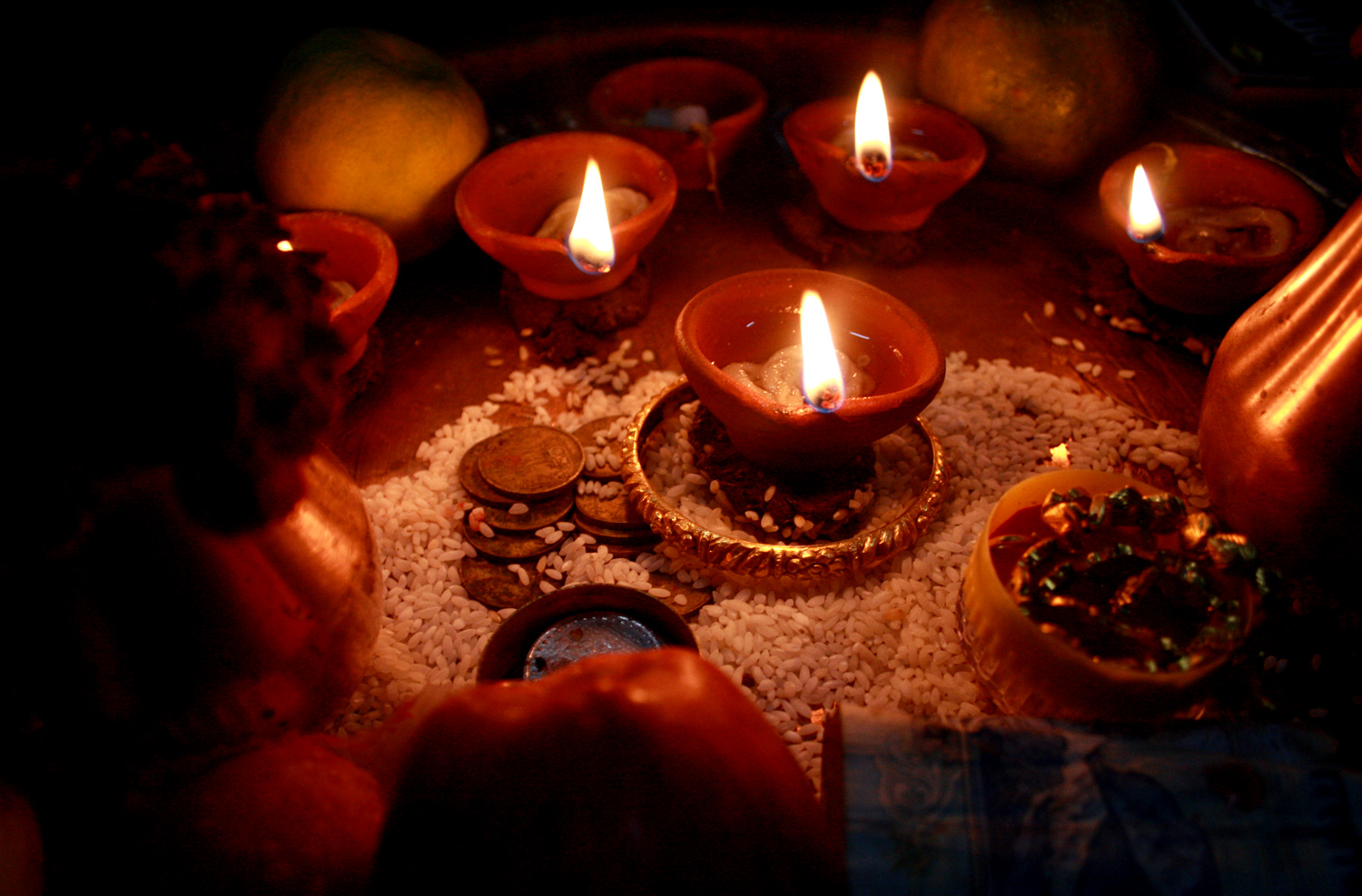
Diwali is the festival of light, associated primarily with Goddess Lakshmi and Lord Ganesha. Yet Hanuman has his own deep connection to Diwali — one that goes to the very heart of the Ramayana story.
Why Diwali Belongs to Hanuman Too
Diwali celebrates the day Lord Ram, Sita, and Lakshmana returned to Ayodhya after 14 years of exile and Ram’s defeat of Ravana. The people of Ayodhya lit oil lamps along every street and rooftop to welcome them home in the dark of the new moon night.
That homecoming was only possible because of Hanuman. He found Sita, he sustained the army’s morale, he brought the Sanjeevani herb when Lakshmana lay dying, he fought courageously through the war. Without Hanuman, there would have been no return to Ayodhya, and no Diwali.
This is why many traditions include Hanuman puja as part of Diwali — honouring the one who made Ram’s return possible.
Hanuman Puja on Diwali Night
In many families and in temples across Rajasthan, Madhya Pradesh, and parts of North India, Hanuman is worshipped at midnight on Diwali. REGIONAL/TRADITIONAL ACCOUNT: This midnight puja practice is found in specific regional and family traditions; it is not a universal Diwali observance across all of India. The prevalence of this practice varies significantly by region and community.
The belief is that on Diwali night, negative forces are at their strongest before being defeated by the light. Hanuman’s midnight puja invokes his protective power at this vulnerable hour. TRADITIONAL/BELIEF
How to Do Hanuman Puja on Diwali
- After the main Lakshmi-Ganesha puja in the evening, keep the lamps lit
- At or near midnight, go before Hanuman’s image and light a diya with til (sesame) oil
- Offer sindoor and flowers
- Recite Hanuman Chalisa once or 5 times
- Recite Bajrang Baan for additional protection
- Ask Hanuman to bless and protect the home in the year ahead
Hanuman Jayanti and the Diwali Season
In some South Indian communities, Hanuman Jayanti is observed on Kartik Krishna Chaturdashi — the night before Diwali (or, in some regional reckoning, on Diwali itself). REGIONAL/TRADITIONAL ACCOUNT: This Kartik Chaturdashi Hanuman Jayanti is specific to certain South Indian communities; it differs from the mainstream North Indian tradition (Chaitra Purnima) and from the Karnataka/Tamil Nadu tradition (Margashirsha Amavasya). All three dates are observed by different communities.
For the complete Hanuman Jayanti guide including all regional date traditions, see Hanuman Jayanti.
Related Pages
- Hanuman Festival Calendar — all major Hanuman festivals and auspicious days
- Hanuman Jayanti — Hanuman’s birthday and its regional date variations
- Navratri & Hanuman — the Navratri-to-Dussehra season
- Ayodhya History — Ram’s return and the origin of Diwali in the Ramayana
- Hanuman Chalisa — the primary prayer
- Bajrang Baan — for protection
Jai Bajrang Bali! Shubh Diwali!