
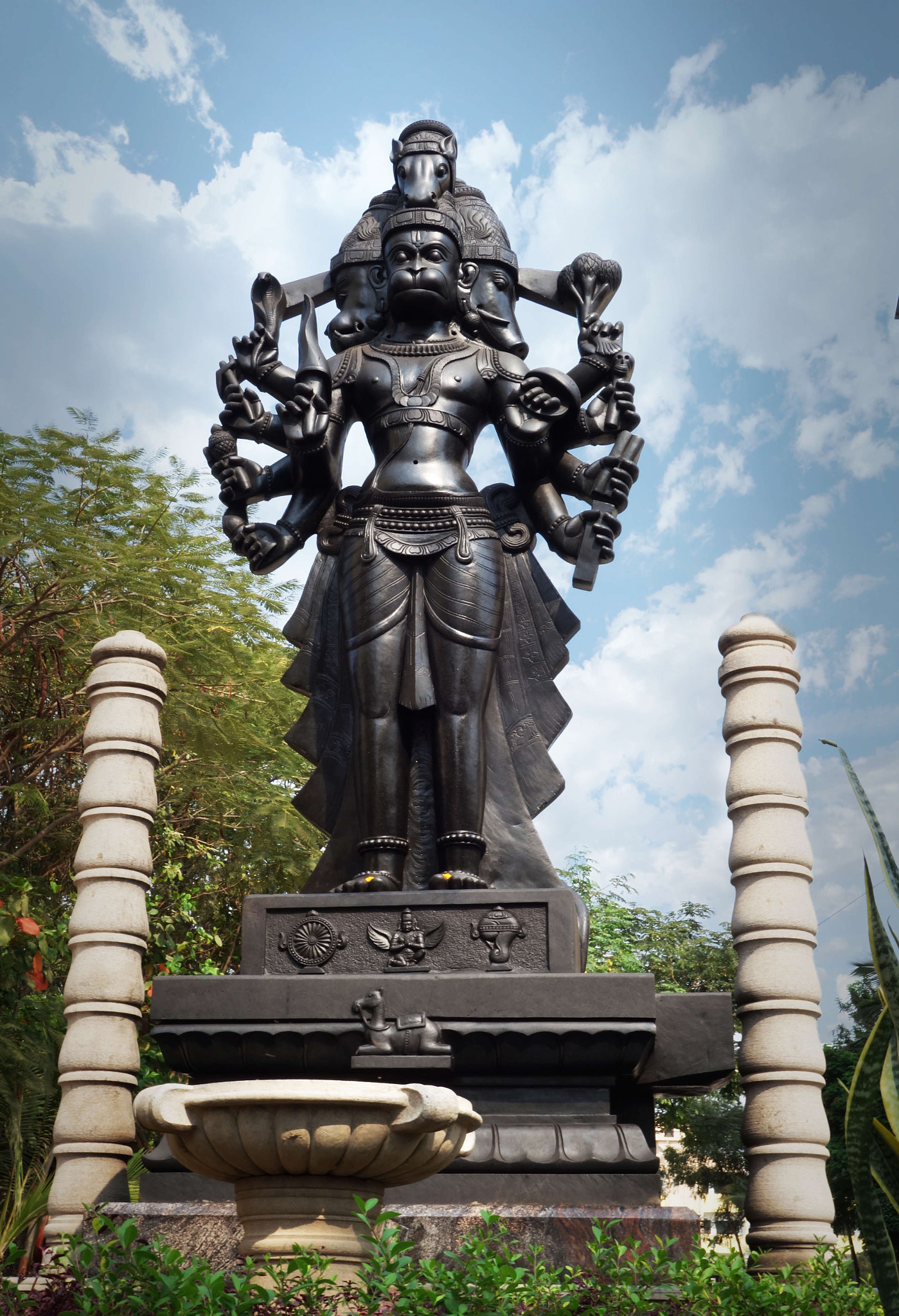
Panchmukhi Hanuman (पंचमुखी हनुमान) is the five-faced form of Lord Hanuman. Pancha means five, mukhi means faced. This form is worshipped for complete protection, victory over enemies, and spiritual liberation.
The Story of the Panchmukhi Form
During the war between Lord Ram and Ravana, the demon Ahiravana kidnapped both Ram and Lakshmana and took them into Patal Lok (the underworld). He planned to sacrifice them to his deity. Vibhishan revealed that Ahiravana’s life force was contained in five lamps burning in five different directions simultaneously — all five had to be extinguished at exactly the same moment to kill him.
Hanuman assumed the Panchmukhi form — five faces each looking in a different direction — and extinguished all five lamps simultaneously, destroying Ahiravana and saving Ram and Lakshmana.
Note: The Ahiravana/Panchmukhi episode does not appear in Valmiki’s original Ramayana. It is found in the Adbhuta Ramayana and in regional devotional traditions, particularly in South India. It is a well-established part of the Hanuman devotional tradition, though its scriptural classification varies.
The Five Faces and Their Significance
Each face of Panchmukhi Hanuman represents a deity and a direction. The traditional attributions given in devotional literature are:
| Face | Direction | Deity / Form | Nature | What It Removes / Grants |
|---|---|---|---|---|
| Hanuman | East | Original form — the vanara bhakta | Devotion, strength | Removes fear; grants courage, protection, and Ram's grace. East is the direction of the rising sun and new beginnings. |
| Narasimha | South | Man-lion avatar of Vishnu | Fierce protection | Destroys enemies; removes evil eye (buri nazar), malefic planetary influences. South is the direction of Yama — challenges to be overcome. |
| Garuda | West | Divine eagle — vehicle and devotee of Vishnu | Purification | Neutralises poison (physical and metaphorical); removes effects of black magic and sorcery. (Traditional/belief) |
| Varaha | North | Boar avatar of Vishnu — who lifted the earth from the ocean | Prosperity, abundance | Grants material prosperity and wealth. North is the direction of Kubera, the god of wealth. |
| Hayagriva | Upward (Urdhva) | Horse-headed deity of knowledge — form of Vishnu | Wisdom, liberation | Grants wisdom, learning, and ultimately moksha (liberation). The upward direction represents transcendence of the earthly plane. |
The specific attributions of each face vary somewhat between traditions and texts. The table above reflects the most widely given account in North and South Indian devotional literature and temple traditions.
Why Worship Panchmukhi Hanuman
This form simultaneously invokes five deities — their combined presence is said to protect the devotee from all five directions. Devotional tradition specifically associates this form with:
- Complete protection of the home and family
- Victory over enemies and negative forces
- Removing Vastu doshas (energy imbalances in the structure of a building) TRADITIONAL/BELIEF
- Legal matters and conflicts
Famous Panchmukhi Hanuman Temples
- Panchmukhi Hanuman Temple, Karur, Tamil Nadu — One of the most ancient temples of this form; said in local tradition to be where Hanuman assumed this form to defeat Ahiravana
- Shri Panchmukhi Hanuman Mandir, Porbandar, Gujarat
- Panchmukhi Anjaneya Temple, Kumbakonam, Tamil Nadu
TIME-SENSITIVE: Temple details (locations, access, timings) should be verified locally before relying on them.
Related Pages
- About Hanuman Ji — the complete introduction to Hanuman’s identity and forms
- Makardhwaj — another story set in the Ahiravana episode in Patal Lok
- 108 Names of Hanuman — includes names referring to this form (Panchavaktra, Chaturbahave)
- Hanuman Mantras — including mantras invoking the Panchmukhi form
- Hanuman Chalisa — the 40-verse prayer
Jai Panchmukhi Bajrang Bali!