
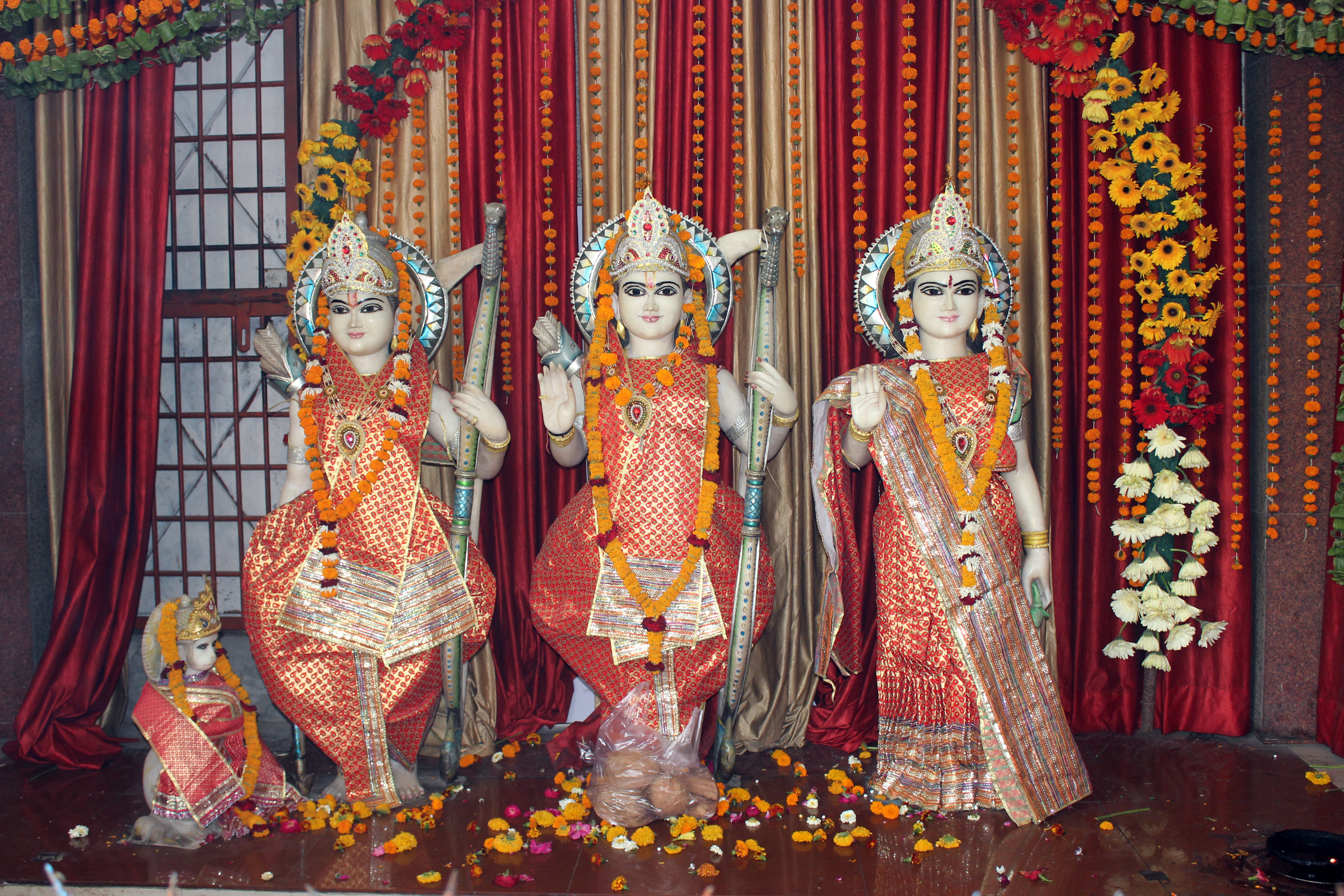
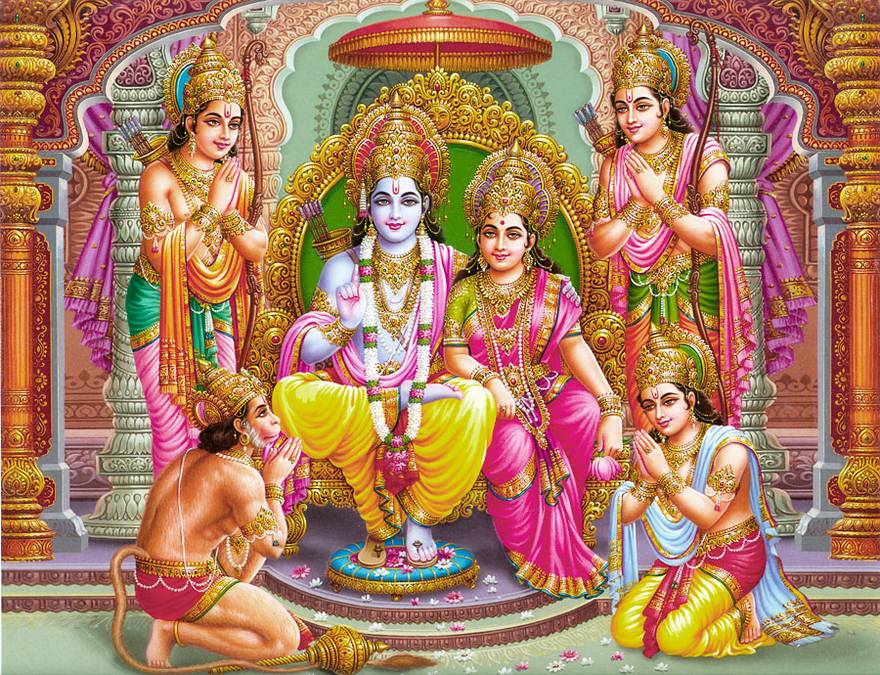
Ram Aarti is performed in homes and temples at the close of daily worship, honouring
Bhagwan Ram as the ideal king, devoted husband, and embodiment of dharma. This page
contains two devotional texts: the Ram Ji Aarti (a traditional aarti
sung in praise of Ram) and the Shri Ram Stuti (a celebrated hymn
attributed to Goswami Tulsidas).
Both texts are in Hindi/Sanskrit and are widely used in the north Indian devotional
tradition. Hanuman’s unwavering devotion to Ram makes Ram Aarti a natural companion to
Hanuman Chalisa and other Hanuman prayers — many devotees
recite both in the same sitting.
Ram Ji Aarti — आरती कीजै रामचन्द्र जी की
(FACT-CHECK FLAG: the attribution of the Ram Ji Aarti below is not stated in the
source material. The fifth verse mentions Namdev Ji, which may indicate authorship or
association with the bhakti poet Namdev; this should be confirmed before stating it as
a verified attribution.)
आरती कीजै रामचन्द्र जी की।
हरि-हरि दुष्टदलन सीतापति जी की॥
पहली आरती पुष्पन की माला।
काली नाग नाथ लाये गोपाला॥
दूसरी आरती देवकी नन्दन।
भक्त उबारन कंस निकन्दन॥
तीसरी आरती त्रिभुवन मोहे।
रत्न सिंहासन सीता रामजी सोहे॥
चौथी आरती चहुं युग पूजा।
देव निरंजन स्वामी और न दूजा॥
पांचवीं आरती राम को भावे।
रामजी का यश नामदेव जी गावें॥
Shri Ram Stuti — श्री रामचन्द्र कृपालु भजु मन
This stuti is attributed to Goswami Tulsidas and is one of the most widely recited
devotional hymns in praise of Bhagwan Ram. It describes Ram’s beauty, his form adorned
with royal ornaments, and beseeches him to reside in the devotee’s heart.
(FACT-CHECK FLAG: the attribution to Tulsidas, and whether this stuti appears in a
specific text such as Vinay Patrika or is of separate composition, should be confirmed
against published scholarly editions.)
श्री रामचन्द्र कृपालु भजु मन हरण भव भय दारुणं।
नव कंजलोचन, कंज – मुख, कर – कंज, पद कंजारुणं॥
कंन्दर्प अगणित अमित छबि नवनील – नीरद सुन्दरं।
पटपीत मानहु तडित रूचि शुचि नौमि जनक सुतवरं॥
भजु दीनबंधु दिनेश दानव – दैत्यवंश – निकन्दंन।
रघुनन्द आनंदकंद कौशलचन्द दशरथ – नन्दनं॥
सिरा मुकुट कुंडल तिलक चारू उदारु अंग विभूषां।
आजानुभुज शर – चाप – धर सग्राम– जित – खरदूषणमं॥
इति वदति तुलसीदास शंकर – शेष – मुनि – मन रंजनं।
मम ह्रदय – कंच निवास कुरु कामादि खलदल –गंजनं॥
Doha — दोहा
The following doha is from the Ramcharitmanas of Tulsidas (Bal Kand), describing Sita’s
joy when she receives the blessing of Goddess Gauri (Parvati) before her swayamvar.
(FACT-CHECK FLAG: the specific location within Ramcharitmanas and its devotional context
in relation to this aarti page should be confirmed — it is unclear from the original source
material whether this doha was intended as a standalone coda or forms part of a longer
sequence.)
मनु जाहिं राचेउ मिलहि सो बरु सहज सुन्दर साँवरो।
करुना निधान सुजान सिलु सनेहु जानत रावरो॥
एही भाँति गौरि असीस सुनि सिया सहित हियँ हरषीं अली।
तुलसी भवानिहि पूजी पुनिपुनि मुदित मन मन्दिरचली॥
जानि गौरी अनुकूल सिय हिय हरषु न जाइ कहि।
मंजुल मंगल मूल बाम अंग फरकन लगे॥
Recitation and Practice
Ram Aarti is typically performed at the close of Ram puja — after the main prayer and
before the prasad distribution. A lamp (diya or aarti thali) is circled before the image
of Ram while the aarti is sung. The Shri Ram Stuti that follows may be recited
independently as a morning or evening prayer.
(TRADITIONAL/BELIEF — specific recitation customs vary by family tradition and
sampradaya.)
Related devotional texts for Hanuman devotees:
- Hanuman Chalisa — the central 40-verse prayer
by Tulsidas - Hanuman Aarti — Aarti Kijo Hanuman Lala Ki
- Hanuman Puja Vidhi — guide to Hanuman
worship - Sundar Kand — Hanuman’s chapter in the Ramayana
Jai Shri Ram — Jai Hanuman Ji.