
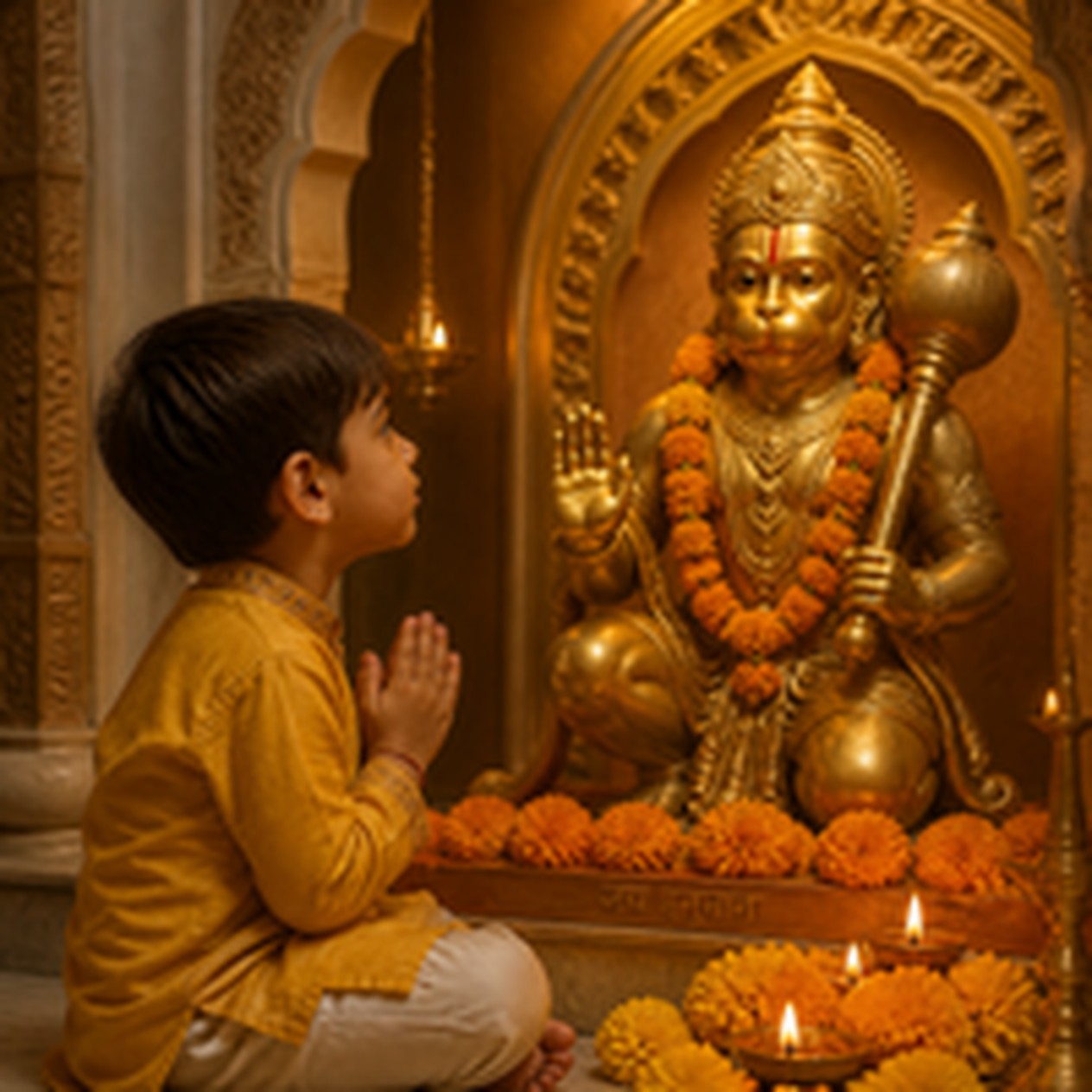
A gentle family guide to stories prayer and values
Children can begin to know Hanuman Ji through a simple truth: He loves Shri Ram and uses His strength to help others. A parent or caregiver does not need to teach every story, every prayer, or every ritual at once. Start with warmth, short stories, and the values that children can recognise in everyday life.
The aim is not to make a child afraid of making mistakes or to demand perfect recitation. It is to help them meet Hanuman Ji as a beloved example of courage, service, humility, and devotion. As children grow, they can explore the Ramayana and family traditions in greater depth.
Begin With One Clear Idea
For a young child, begin with a sentence they can hold onto: “Hanuman Ji is Shri Ram’s devoted helper. He is strong, kind, and brave.” Repeat it naturally when you tell a story, see an image in a temple, or hear a bhajan. This gives the child a foundation before they meet the larger world of the Ramayana.
Use words the child already understands. Explain seva as helping without asking for praise. Explain courage as doing the right thing even when something feels hard. Explain devotion as loving and remembering God with sincerity.
Choose Stories With Care
The Ramayana offers powerful stories of Hanuman Ji’s service to Shri Ram. For many children, a parent can begin with a gentle telling of His meeting with Shri Ram, His journey to Lanka to find Sita Ji, or His return with hopeful news. Keep the focus on why He acted: He wanted to serve Shri Ram and help Sita Ji.
Some familiar childhood stories, such as young Hanuman Ji reaching for the sun or studying with Suryadev, are cherished in later tellings and regional traditions. They are loved by many families, but they are not all presented in the same way in the Valmiki Ramayana. It is helpful to say, “This is a story our tradition tells about Hanuman Ji,” rather than presenting every version as the same scriptural account.
Adjust the story to the child. Very young children may need only the beginning, the kind action, and a peaceful ending. Older children may be ready to ask why characters made difficult choices. You do not have to include frightening scenes before a child is ready.
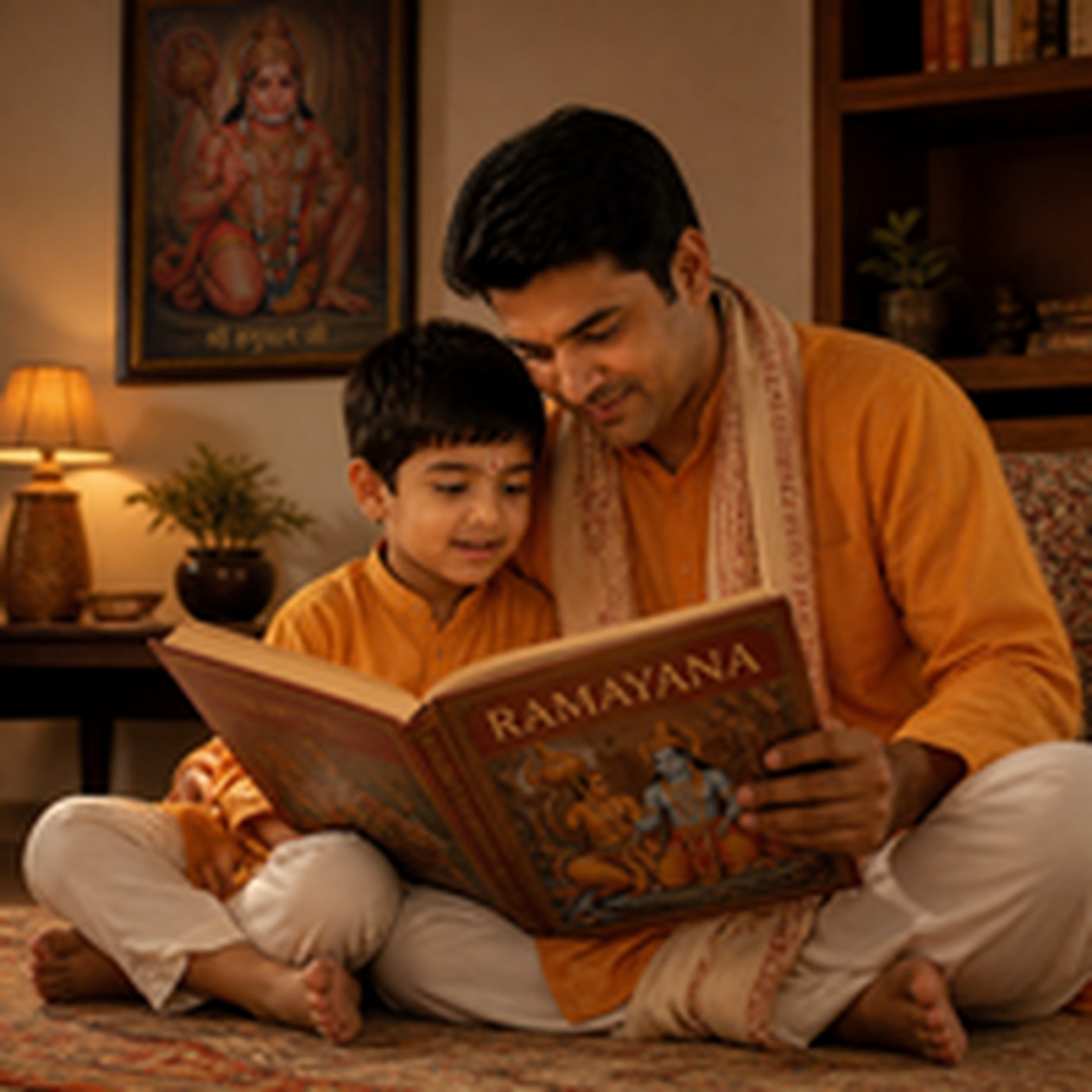
Ask Questions Instead of Giving a Lecture
After a story, ask one simple question. “How did Hanuman Ji help?” “What would you do if a friend was worried?” “Why do you think He remembered Shri Ram?” Let the child answer in their own way. A quiet question can help a story become part of their own moral imagination.
Children may notice details adults pass over. If they ask a question you cannot answer, it is fine to say, “Let us find out together.” Curiosity is part of learning, and it is better than giving an uncertain answer as though it were a fact.
Let Prayer Be Simple and Voluntary
A child can join a short family prayer, listen to the Hanuman Chalisa, or repeat “Jai Hanuman” and “Jai Shri Ram.” Invite rather than pressure. Some children will enjoy singing; others may prefer to fold their hands quietly or simply listen. A prayer that feels safe and loving is more likely to become a lasting habit.
A simple child friendly prayer can be:
Hanuman Ji, please help me be brave, kind, and truthful. Help me remember Shri Ram and help others when I can. Jai Hanuman.
Do not use prayer as a punishment or tell a child that Hanuman Ji will harm them for getting a word wrong. In devotional life, reverence grows best alongside trust. If your family observes a fast or a longer ritual, keep the child’s age, health, comfort, and the guidance of responsible adults in mind.
Connect Hanuman Ji’s Qualities to Daily Life
Children learn through what they see. Point out small forms of seva: carrying a glass of water for someone, keeping a promise, speaking the truth, helping a younger sibling, or trying again after a mistake. These are everyday ways to talk about the qualities devotees admire in Hanuman Ji.
- Courage can mean asking for help when you are scared.
- Strength can mean using your abilities kindly.
- Humility can mean doing good work without boasting.
- Devotion can mean remembering Shri Ram with love.
These are devotional reflections, not a claim that every child should behave perfectly. Children learn gradually, and adults do too.
Make Space for Different Family Traditions
Some families visit a Hanuman temple on Tuesday or Saturday. Some recite the Chalisa at home. Some share stories in Hindi, English, or another language. Others begin with a picture, a bhajan, or one short name of Hanuman Ji. There is no need to copy another family exactly. Keep what is meaningful, respectful, and manageable in your home.
If you are teaching a child outside your own family tradition, be especially careful not to present one regional practice as the only Hindu way. Explain that different homes and communities may remember Hanuman Ji in different ways.
Frequently Asked Questions
What is a good age to start telling children about Hanuman Ji
There is no fixed age. Very young children can begin with a simple image, name, or short story. Add detail as the child shows interest and understanding.
Do children need to memorise the Hanuman Chalisa
No. A child may listen, join one familiar line, or learn slowly over time. Memorisation can be joyful, but it should not become a source of pressure.
Can I tell the childhood stories of Hanuman Ji
Yes. They are beloved in many homes. When a story comes from a later or regional tradition, describe it honestly as a traditional telling rather than assuming every version appears in the Valmiki Ramayana.
What if a child is frightened by a story or temple image
Listen first. Choose a gentler story, answer simply, and do not force the child to look or participate. You can return to Hanuman Ji’s care for Shri Ram, strength used for helping, and loving remembrance.
A Closing Thought
The most meaningful introduction is often a small and repeated one: a story before bed, a quiet “Jai Hanuman,” a parent who serves others, or a family that speaks respectfully about faith. Let children encounter Hanuman Ji through courage joined with kindness and strength joined with humility. Jai Hanuman. Jai Shri Ram.
Source and Approach
Scripture: the Ramayana context in this article comes from the Valmiki Ramayana, especially Hanuman Ji’s service to Shri Ram in the Kishkindha and Sundara Kandas. Traditional storytelling: childhood narratives about Hanuman Ji vary across later Puranic, regional, and oral traditions. Devotional guidance: the suggestions for speaking with children are pastoral guidance, not scriptural commands and not promises of a particular outcome.
Reference reading: Valmiki Ramayana | JaiHanumanJi.in Bal Hanuman Stories | JaiHanumanJi.in Sundar Kand